
Blog
Blessingtide.com Review: Is It Safe, Legit, and Useful?

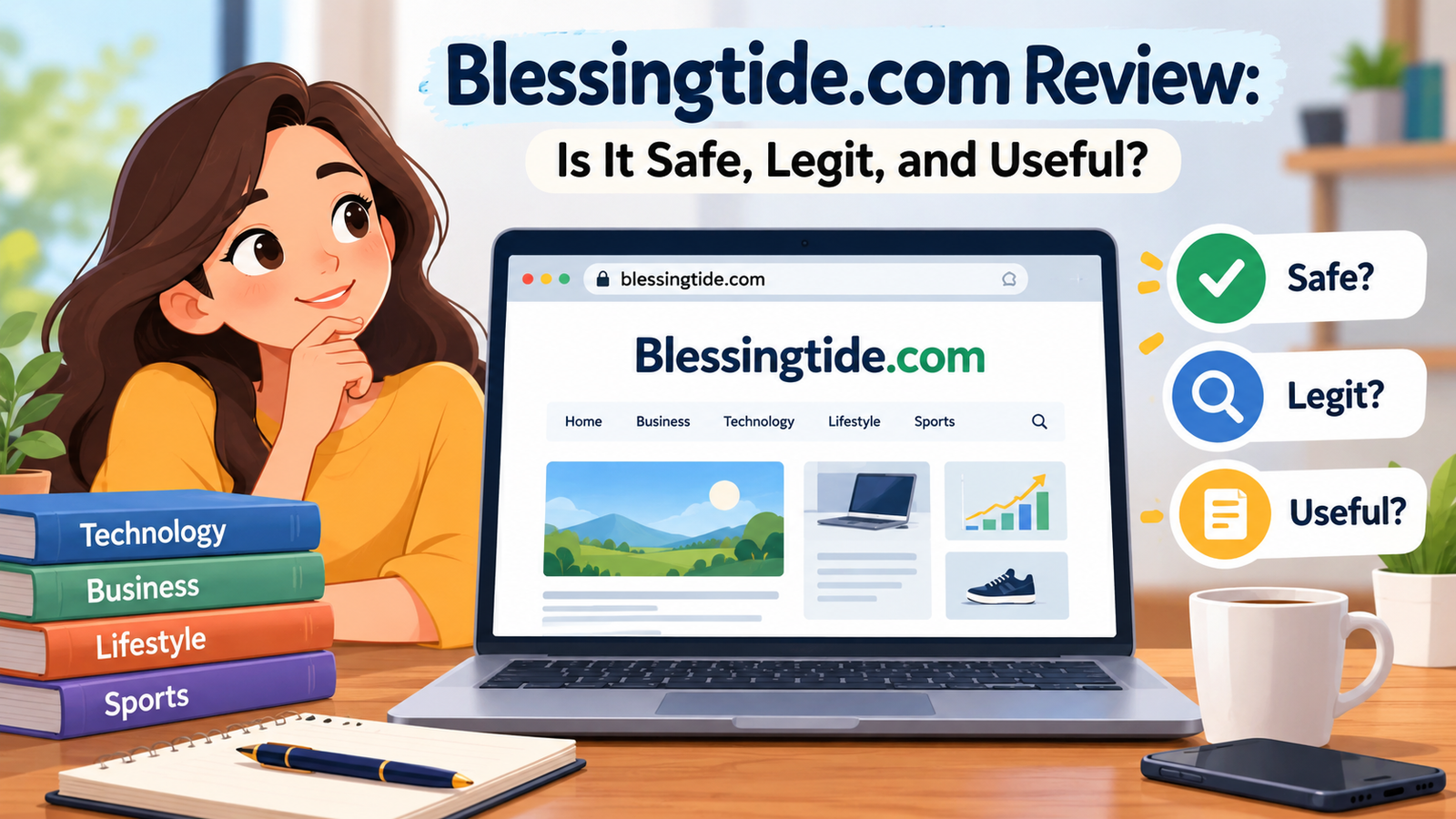
Blessingtide.com is a website that shares prayers, blessings, Bible verses, and articles on many topics. Its main focus is Christian faith and positive messages. The site also has posts about technology, business, sports, law, products, and daily life.
But what does this website offer? Who runs it, and is its content safe to trust? These are common questions. The site’s name sounds religious, but its homepage covers many other topics.
This Blessingtide.com review looks at its purpose, features, content, and ownership. It also explains how to use the site and what readers in the USA should know.
What Is Blessingtide.com?
Blessingtide.com is an online blog that shares faith-based posts and general articles. Its About Us page describes it as a place for prayer, hope, and Christian messages. The site aims to help readers find comfort through Bible verses, blessings, and kind words.
The website also covers many topics outside religion. Its homepage has articles about software, online tools, business services, home projects, and products. It is now a general blog with a strong focus on faith in its branding.
For example, someone may visit the site to find a Friday blessing for their family. Another person may find it on Google while looking for details about a software tool or home repair. Both readers can find different types of content on the same site.
The website is mainly in English. Readers can open it on a phone, tablet, or computer. Its public articles are free to read, and visitors do not need an account to view them. The site also welcomes readers from different countries.
What Does Blessingtide.com Offer?
Blessingtide.com has two main types of content. The first covers faith, prayers, blessings, and Bible verses. The second includes articles about business, technology, news, and daily life.
Its faith-based posts are for people who want comfort, hope, or kind words to share. Readers can find morning prayers, weekly blessings, Christian quotes, and wishes for special days. Some posts also have images that people can share with friends and family.
The site also shares guides about common topics. These articles explain products, business tools, online services, and other subjects. They aim to give readers basic facts and helpful details.
Main Topics on the Website
- Faith and inspiration: Prayers, Bible verses, blessings, and Christian messages.
- Technology: AI tools, software, apps, and online services.
- Business: Marketing, company services, and business guides.
- Sports and news: Football, sports updates, and general news.
- Law and lifestyle: Legal topics, home care, health, and daily needs.
This mix of content brings different types of readers to the site. Still, each article should be judged by its facts, sources, and publication date.
Blessingtide.com Content and Categories
Blessingtide.com uses categories to group its articles. These sections help readers find posts about a certain topic. Some focus on faith, while others cover business, news, and general subjects.
The site has categories such as Celebrity, Product News, News, Law, Tech News, Sports, Physical Blessings, and Friday Blessing. Readers can find these sections through the site’s menus, footer, and article pages.
Popular Content Categories
The Product News section has posts about machines, electronics, and industry products. The Law section covers legal topics and basic guides. The blessing sections share prayers, quotes, images, and positive wishes.
The Tech News category covers software, AI tools, and digital services. Sports articles focus on football and other sports topics. The site also has posts about homes, business services, and daily needs.
Articles published in September and October 2026 show the wide range of topics. Some examples include:
- Best Instagram viewers to explore in 2026.
- Outdoor LED display boards and their uses.
- Home remodeling in Sammamish.
- TeamViewer pricing compared with Splashtop.
These posts show that the site is not limited to religious content.
Some category names may not match every article inside them. For example, a blessing section may also have posts about business or online tools. Readers should check the title before opening a page.
The website also has a sitemap. It lists pages and helps visitors find more content. This can be useful when an article is hard to find through the main menu.
Prayers and Christian Content on Blessingtide.com
Christian messages are a key part of BlessingTide’s stated purpose. Its About Us page says the site shares prayers, Bible verses, blessings, and words about faith. These posts focus on hope, peace, and comfort.
Readers can find prayers and wishes for many days and events. Some posts cover gratitude, family, love, and support during hard times. Others share Bible verses and short messages for personal prayer.
Types of Blessings and Prayers
The website has published posts about:
- Monday blessings and morning prayers.
- Tuesday prayers and positive wishes.
- Thursday and Friday blessings.
- Weekend prayers and Christian quotes.
- Birthday messages and New Year blessings.
Some articles have large sets of quotes and images. Readers can use them for prayer or share them with people they know.
For example, a person may want a short Friday prayer to send to a friend. Another may need a birthday wish with a Christian message. The site has posts that cover these needs.
The website also has some content from other faith traditions. For example, it has published articles about Islamic birthday wishes and duas. This shows that its spiritual content is not limited to Christian messages.
Readers can use these posts for comfort and kind wishes. When sharing an exact Bible verse or other religious quote, it is best to check the words against a trusted religious text.
How to Use Blessingtide.com
Using Blessingtide.com is easy. Readers can open the site through a web browser on a phone, tablet, or computer. Public articles can be read without creating an account.
The homepage shows recent posts with titles and dates. Readers can choose an article and open the full page. Many posts also show the name of the writer.
Steps to Explore the Website
- Visit the official site at https://blessingtide.com/.
- Look through the homepage or open a category.
- Choose an article that matches your topic.
- Read the full post and check its date.
- Use the sitemap or related posts to find more content.
If you want a Sunday blessing, start with the faith-based sections. If you need facts about a new AI tool, look for a post in the technology or news sections.
Using the Website on Mobile and Desktop
The site can be opened in browsers such as Chrome, Safari, Firefox, and Edge. Readers may also reach its articles through Google, WhatsApp, or shared links.
On a phone, users can scroll through articles and open other posts. On a computer, they can use separate tabs to compare facts from different websites.
Before trusting an article, check whether it answers your question. A good post should give clear facts, useful examples, or simple steps.
For topics such as health, law, money, or safety, check key facts with trusted sources. A well-written article can still have mistakes or old information.
The site also has a Contact Us page. Visitors can send questions or feedback using a form with fields for their name, email, subject, and message. Avoid sharing private details that are not needed.
Who Owns and Manages Blessingtide.com?
There is little public information about who owns Blessingtide.com. The website’s footer links the BlessingTide name with Zyan-Ch. It describes the site as a place for positive words, thanks, and hope.
However, it does not say if Zyan-Ch is the owner, founder, editor, or someone else linked to the site. There is also no clear company history or confirmed business address on its main public pages.
Authors and Website Management
Different author names appear on the website. Emilia is credited on many business, technology, and general articles. The name webpulse also appears on some posts.
These names tell readers who is listed as the writer. They do not prove the real identity of each person or who owns the website.
The site has an About Us page and a Contact Us page. Both are useful for learning about the site and sending questions. Still, some details remain unclear.
These include:
- The full name of the legal owner.
- The registered company name, if any.
- The exact date the website was founded.
- The main office or business address.
- The real identities behind some author names.
Missing owner details do not prove that a site is unsafe. However, clear ownership and writer information can help readers judge a website.
For now, it is best to describe Zyan-Ch as a name linked to the site, not as its confirmed owner.
Is Blessingtide.com Based in the USA?
Many users search for “Blessingtide.com USA” or “BlessingTide US.” They may want to know if the website is based in America or has a special version for U.S. readers.
There is no clear public proof that Blessingtide.com has its main office in the United States. American readers can visit the website, but this does not mean the business is based there.
The site’s About Us page welcomes people from around the world. It does not clearly list a U.S. office, registered American company, or confirmed physical address.
What U.S. Readers Should Know
The website has articles about American businesses, legal topics, tech products, and home projects. Some posts also focus on services in certain U.S. states.
Readers should check whether the facts apply to their own location. Rules and services can change from one state or country to another.
For example:
- Legal rules: A law in Colorado may not apply in California.
- Product prices: Costs may change by country or seller.
- Healthcare: Medical rules and services may differ by location.
- Business: Tax laws and company rules can vary by state.
For prayers and blessings, location is less important. A kind message or Bible verse may be useful to readers in the USA, UK, Canada, or other countries.
Readers should also check the website address before opening a link. Other websites use names that look like BlessingTide. They may have different owners and publish different content.
Blessingtide.com USA is a search term, not proof of a separate official U.S. website. The site’s main business location has not been publicly confirmed.
Blessingtide.com vs. BlessingtideUS.com
Blessingtide.com and BlessingtideUS.com have similar names, but they are two different websites. Both share online articles, but their main topics are not the same. Readers should check the web address before visiting either site.
Blessingtide.com shares prayers, blessings, and articles on many topics. These include technology, business, law, sports, and product news.
BlessingtideUS.com focuses on famous people. It shares facts about celebrities, their families, careers, ages, relationships, and personal lives.
Main Differences Between the Two Websites
| Feature | Blessingtide.com | BlessingtideUS.com |
|---|---|---|
| Website type | General content blog | Celebrity information website |
| Main focus | Faith and general topics | Celebrities and biographies |
| Content | Prayers, tech, business, news | Age, family, career, relationships |
| Target readers | General readers | People searching for public figures |
| Language | Mainly English | English |
| Website address | blessingtide.com | blessingtideus.com |
Both sites serve different needs. If you want prayers or general guides, BlessingTide may be helpful. If you want facts about an actor, singer, or other famous person, BlessingtideUS.com may be a better choice.
There is no public proof that both sites have the same owner. Similar names do not mean two websites belong to the same company. Always check the full web address before opening links or sharing details.
Is Blessingtide.com Safe and Legit?
Blessingtide.com is an active website with public articles and basic information pages. Its homepage shows posts with titles, dates, and author names. Visitors can read articles without creating an account.
The site also has an About Us page, Privacy Policy, Disclaimer, and Contact Us page. These pages explain its purpose, basic rules, and ways to contact the site.
However, these pages do not prove that every article is correct or every link is safe. Readers should check key facts before using the information.
Safety Features to Check
Here are some basic features readers should look for:
- HTTPS: Helps protect data sent between the browser and website.
- Privacy Policy: Explains what user data the site says it collects.
- Contact page: Gives visitors a way to send questions or feedback.
- Article dates: Show when posts were published.
- Author names: Tell readers who is credited for each post.
These features are useful, but they do not prove that a website is fully safe. For example, HTTPS helps protect the connection. It does not prove that the content or outside links are safe.
Can You Trust the Website?
BlessingTide can be useful for prayers, simple guides, and basic facts. Readers can open public articles and decide if the content answers their questions.
However, extra care is needed with health, money, law, and safety topics. Some posts may have old facts or leave out key details. Readers should check these claims with trusted sources.
Avoid unknown downloads or links that ask for private details. You do not need to share passwords, bank details, or other private data to read an article.
The website has basic trust features, but its full ownership details are not clear. Public information alone cannot prove that all its content is safe or correct.
Blessingtide.com Privacy Policy and User Data
Blessingtide.com has a Privacy Policy that explains how the site says it collects and uses visitor data. It covers personal details, cookies, contact forms, and website activity.
The policy says the site may collect names and email addresses when visitors send messages or sign up for updates. It may also collect browser type, device details, IP addresses, and pages viewed.
The website says this data helps it reply to messages, improve its pages, and send updates or positive messages to readers.
What Information May Be Collected?
The official Privacy Policy lists these types of data:
- Name and email: May be collected through forms or email sign-ups.
- Browser details: Help the site learn how visitors use its pages.
- Device data: May show what type of device a person uses.
- IP address: May be collected when someone visits the site.
- Cookies: May save settings and help track website use.
The policy states that the site does not sell or rent personal data to outside companies. It also says users can ask to view, change, or delete their information.
Readers can contact the site with privacy questions. The policy also explains that users can stop getting emails by unsubscribing.
How to Protect Your Privacy
Before sending a form, check what details it asks for. A contact form may need your email to send a reply. It should not need your bank details or passwords.
You can also control cookies through your browser settings. If a link opens another website, check that site’s privacy rules before sharing any information.
These steps can help protect your data. Keep in mind that a Privacy Policy explains what a website says it does. It does not prove that an outside group has checked those claims.
How Reliable Is Blessingtide.com Content?
The quality of an article depends on its facts, sources, and topic. Blessingtide.com covers many subjects, so each post should be checked based on what it claims.
For example, a blessing is mainly meant to share kind words. A guide about business software should have clear product facts and current prices. A legal article should use correct laws and explain which area those laws cover.
Many BlessingTide posts show an author name and date. This helps readers know when the content was published. However, a name alone does not prove that the writer is an expert.
How to Check Article Quality
Use these simple steps to check an article:
- Check the date: See when the article was published or updated.
- Look at the author: Check who is credited for the content.
- Read the details: Look for clear facts, steps, and examples.
- Check the sources: See if important claims have proof.
- Compare the facts: Use trusted sources to confirm key details.
For example, a post about software may list its tools and prices. Before buying, visit the company’s official website. The price or features may have changed since the post was written.
The same rule applies to law and health topics. A general article can help you learn basic facts. It should not replace advice from a trained expert.
What Does the Website’s Disclaimer Say?
BlessingTide has an official Disclaimer page. It says its spiritual posts are for general inspiration and personal reflection. It also warns that some content may have errors or missing details.
The Disclaimer says prayers and Bible verses should not replace professional spiritual or mental health advice. The website also says it is not responsible for content on outside websites.
These points are important for readers. The site can help people learn about many topics, but important decisions should be based on trusted sources.
Benefits and Limitations of Blessingtide.com
Blessingtide.com shares many types of articles in one place. Readers can find prayers, Bible verses, positive quotes, news, and guides about common topics. This may help people who enjoy reading about different subjects.
The website has categories and links that help visitors explore posts. Public articles are free to read, and an account is not needed. Readers can also open the site on phones, tablets, and computers.
However, the website has some limits. Its legal owner and main business address are not clearly listed. Some categories also have a mix of topics that may not match their names.
Main Benefits
Here are some useful features:
- Free access to public articles.
- Prayers, blessings, and Bible verses.
- Posts about business, technology, and daily life.
- Dates and author names on many articles.
- Contact and privacy information pages.
- Access through common web browsers.
These features can be helpful for casual readers. For example, someone looking for a birthday blessing can find a message without making an account.
A person searching for product details may also find a useful guide. However, it is best to check the maker’s official website before buying a product.
Main Limitations
The website also has some limits:
- Its legal owner is not clearly named.
- Some categories contain mixed topics.
- Not every article has detailed source links.
- Facts about fast-changing topics may become old.
- The website cannot replace expert advice.
These limits do not mean the website is not useful. They show why readers should check articles based on their topic and purpose.
BlessingTide may be helpful for prayers, kind messages, and general reading. People who need medical, legal, or money advice should use official sources or speak with trained experts.
What to Do If Blessingtide.com Is Not Working
Sometimes a website may fail to open or take too long to load. This can happen due to a weak internet link, browser problems, or a short issue with the website’s server.
If Blessingtide.com is not loading, first check whether other websites work. If they also fail, your internet connection may be the cause.
If other sites work but BlessingTide does not, try opening it again. You can also use another browser or device to check whether the issue remains.
Simple Ways to Fix Loading Problems
Try these steps:
- Refresh the page: Reload the website and check if it opens.
- Check your internet: Make sure your Wi-Fi or mobile data works.
- Use another browser: Try Chrome, Firefox, Safari, or Edge.
- Clear browser cache: Remove old saved files that may cause errors.
- Try another device: Open the website on a different phone or computer.
- Check the homepage: See if only one article has a problem.
- Try again later: A short server issue may fix itself.
If the homepage works but one article does not, that page may have moved or been deleted. Try searching for the article title or checking related categories.
If the problem continues, you may be able to send a message through the site’s Contact Us page. However, this form may not work if the whole website is offline.
Do not download unknown apps or browser tools that claim to fix the problem. A normal blog should open without extra software.
Conclusion
Blessingtide.com is an online blog with a strong focus on faith and positive messages. It shares prayers, Bible verses, and blessings. It also publishes articles about business, technology, law, sports, products, and daily life.
The website has free public articles, author names, dates, and basic policy pages. However, its legal owner and main business location are not clearly confirmed. Readers should check facts based on each article’s topic.
For prayers, kind wishes, and general reading, Blessingtide.com may be useful. For health, law, money, and other serious topics, readers should confirm key facts with trusted sources before making decisions.
FAQs
What is Blessingtide.com used for?
Blessingtide.com shares prayers, Bible verses, blessings, and articles about technology, business, law, sports, products, and daily life.
Is Blessingtide.com a safe and legitimate website?
Blessingtide.com is an active site with public articles, a Privacy Policy, and a Contact Us page. However, these features do not prove that all its content is safe or correct.
Who owns Blessingtide.com?
The website footer mentions Zyan-Ch, but its legal owner is not confirmed. Author names such as Emilia and webpulse also appear on the site.
Is Blessingtide.com a USA-based website?
There is no clear public proof that Blessingtide.com is based in the USA. American readers can visit it, but its main business location is not confirmed.
Is Blessingtide.com free to use?
Yes, visitors can read its public articles for free without making an account. The site offers prayers, blessings, and general articles on many topics.


A food order can leave the counter looking carefully prepared and arrive with crushed toppings, shifted portions, or a damp carton. When packaging does not suit the contents, even attractive branding cannot correct the experience customers have when they open their purchase.
Well-planned personalized food packaging combines a recognizable brand identity with practical protection and handling. It helps businesses organize portions, communicate product information, and present everything from bakery treats to takeaway meals in packaging developed for the application.
The strongest starting point is the food itself. Temperature, moisture, grease, weight, presentation, and the journey to the customer should guide material and structural decisions before printing is finalized.
Define the Packaging’s Role Before Choosing a Style
Food boxes serve different purposes. Some directly contact the food, while others surround a sealed bag, tray, or primary container.
Identify that role before comparing designs.
A carton around a coffee pouch mainly supports organization, information, and presentation. A burger box must be suitable for its intended contact with prepared food and the conditions of service.
Clarify:
- What the package will contain
- Whether food touches it directly
- How the product is packed
- Expected holding and delivery conditions
- Whether customers eat from the container
- What information must remain visible
These details help prevent one generic format from being used across unsuitable applications.
Customized Food Packaging Starts With Portion Size
Choose dimensions around realistic servings rather than an idealized display arrangement.
Overfilled containers can interfere with closures, compress food, and make handling difficult. Oversized packaging may allow products to move or require unnecessary supporting material.
Test the normal portion and reasonable variation between orders.
For custom food packaging boxes, account for liners, trays, inserts, and individual wrapping. Those components reduce the usable space inside the outer box.
Also check the filled weight. A package that fits the portion still needs enough structural support for lifting, carrying, and the expected stacking arrangement.
Match Food-Contact Materials to the Intended Use
A material described broadly as suitable for food packaging is not automatically appropriate for every food and temperature.
Explain the application to the supplier, including direct contact, grease exposure, moisture, and any intended heating or freezing.
Request supporting information for the proposed materials, coatings, inks, and adhesives as relevant to their use.
Do not infer microwave, oven, or freezer suitability from appearance. The complete container and closure need to be specified for the intended conditions.
Where the printed box is secondary packaging, maintain the appropriate primary enclosure instead of assuming the outer carton provides equivalent protection.
Cookie Boxes Should Limit Movement and Breakage
Cookie boxes should reflect the product’s thickness, fragility, decoration, and portion count.
A firm cookie may tolerate a different arrangement from a delicate sandwich cookie or a heavily decorated biscuit. Stacking can damage surface details even when the box itself remains intact.
Cookie packaging may use suitable trays, dividers, or individual wraps where appropriate.
Test loading and removal with actual products. Customers should not need to press against neighboring cookies to lift one out.
For mixed assortments, check whether products need separation to maintain presentation or address product-specific storage concerns.
Cupcake Packaging Needs Upright Support
Cupcake boxes need enough height for frosting and decorations, along with an interior arrangement that keeps the cakes upright.
A fitted insert should hold the cupcake base without making removal unnecessarily difficult. Test it with the liners and cake sizes used in normal production.
Muffin packaging may require a different layout because the product shape and topping can differ.
Check:
- Clearance above the tallest decoration
- Space between individual products
- Insert stability
- Base support when carried
- Comfortable customer access
Evaluate the filled package during representative handling. A neat counter display does not show whether cupcakes will remain positioned during delivery.

Donut and Pie Boxes Need Support and Clearance
Donut boxes should accommodate the intended arrangement without forcing decorated surfaces against the lid or adjacent products.
A wide, shallow layout can suit some assortments, but the dimensions should follow the actual product count and size.
Pie boxes need support for the filled pie and its base or tray. Include handles, raised edges, and toppings when checking the fit.
Test how staff load the food and how customers remove it. A package that requires tilting a delicate pie to clear the opening may need a different closure or access arrangement.
Chocolate and Candy Packaging Balances Fit With Presentation
Chocolate boxes, candy boxes, and truffle boxes often need defined spaces for individual pieces.
Compartment dimensions should suit the finished products, including any cups or wrappers. Too much clearance can allow movement, while tight cavities can complicate loading and removal.
Chocolate packaging can also provide room for an assortment guide or product identifiers.
For Christmas candy boxes, consider whether seasonal artwork should be permanent or added through a sleeve, label, or card.
A decorative carton does not establish temperature protection. Plan storage and distribution around the confectionery’s requirements rather than relying on presentation packaging alone.
Burger and Hot Dog Packaging Needs Practical Access
Burger packaging should account for the assembled product, including buns, fillings, toppings, and any wrapping.
A lid should close without unnecessarily compressing the food. The base also needs to support the portion during lifting and handling.
Hot dog packaging requires suitable length and width for the finished serving, particularly when toppings extend beyond the bun.
Check whether the customer will eat directly from the package. The opening action and usable base area should support that experience.
Where grease or moisture resistance is needed, confirm the proposed construction and test it with the actual food under representative service conditions.
Pasta and Noodle Packaging Must Suit the Complete Dish
Pasta packaging and noodle packaging should be selected around the prepared dish, including sauces and added ingredients.
Dry retail pasta and hot takeaway noodles present different requirements. Their packages should not be chosen from the same assumptions.
Chinese food boxes and Chinese takeout boxes also vary in structure and performance. A familiar shape does not establish that every version can contain liquid-rich dishes.
Confirm the intended fill level, closure, and carrying orientation.
Where sauces require separate containers, test those containers within the complete order. They should remain secure rather than shifting freely around the main meal.
Leak-Resistant Claims Need Actual Product Testing
A kraft appearance, folded corner, or tab closure does not by itself establish leak resistance.
Performance depends on the material, barrier treatment, seams, closure, food characteristics, and handling conditions.
Before describing customized food containers as leakproof, obtain evidence appropriate to the intended use. Test samples with the actual contents, expected fill level, holding period, and transport arrangement.
Distinguish resistance to surface grease from the ability to contain free liquid.
Cardboard takeaway boxes with tab closures may suit certain meals while requiring separate containers for sauces or dressings. Select the format according to demonstrated performance.
Tea and Coffee Packaging Need an Appropriate Inner Pack
Tea boxes and coffee boxes can organize products and provide space for branding, preparation information, and variant identification.
However, a printed paperboard carton does not automatically provide the barrier needed by the contents.
Coffee packaging may include a suitable primary pouch or container inside an outer box. Tea packaging can involve individually wrapped portions, sealed inner packs, or other product-specific arrangements.
Custom ziplock bags for food may offer convenient resealing, but their materials and production seals still need to suit the product.
Evaluate the primary package and outer carton together rather than treating either component as a universal solution.

Food Delivery Boxes Should Organize the Whole Order
Food delivery packaging must account for more than one container in isolation.
A meal box may contain a main dish, side, sauce, dessert, and cutlery. Their positions should support carrying and reduce unwanted movement.
Test the complete order inside its delivery bag or outer box.
Consider:
- Heavier items at the base
- Separation of delicate products
- Secure sauce containers
- Clear order identification
- Stack stability
- Opening without spilling loose components
Paper food boxes alone should not be assumed to maintain safe food temperatures. Temperature management requires an appropriate food-handling and delivery process for the application.
Recipe Boxes and Subscription Orders Need Flexible Layouts
Recipe boxes and recurring food assortments can change from one delivery to the next.
Evaluate several planned combinations before approving dimensions. A package developed around one week’s contents may not accommodate a taller container or heavier assortment later.
Separate food items from printed recipes and other additions where needed.
Products requiring controlled temperatures need a suitable distribution system rather than a decorative outer box alone.
Packaging for pet food deserves its own specification as well. Dry treats, oily products, and other pet-food formats may require different barriers and closures; do not assume a pouch approved for another product is automatically suitable.
Food Box Printing Should Make Orders Easy to Identify
Food box printing can create a consistent appearance across different package sizes, but useful information needs priority.
Make the brand, product type, and relevant variant easy to recognize. Leave suitable space for order labels and applicable product information.
Branded food containers should also help staff distinguish similar-looking orders during service.
Keep permanent artwork separate from information that changes frequently. Labels or other suitable variable-printing methods may provide more flexibility for changing menus.
Review artwork on the assembled package. Important wording should remain readable after folding, closing, and placing the container in its normal carrying position.
Sustainable Choices Need More Than a Natural Appearance
The most suitable sustainable custom packaging for food outlets depends on the application and available disposal systems.
A brown surface or plant-based description does not establish recyclability or compostability. Coatings, liners, attached components, and food contamination all affect disposal options.
Start with practical questions:
- Can the package be appropriately right-sized?
- Are all separate components necessary?
- Does it protect the food effectively?
- Is the environmental claim supported?
- Can customers follow the disposal instructions locally?
Avoid removing a necessary barrier simply to reduce components. Product protection and the prevention of avoidable food waste belong in the decision.
Compare Custom Food Packaging Supplies Through Samples
When comparing custom food packaging companies, provide the same brief so quotations describe equivalent requirements.
Include portion dimensions, direct-contact conditions, materials, printing, quantities, and the intended packing process.
Test custom food packaging supplies during actual operations. Review assembly, loading speed, closure consistency, filled weight, handling, and performance over the expected service period.
Confirm repeat-order specifications and how changes will be approved.
A lower unit price may offer limited value if the package requires extra labor, additional liners, or frequent replacements. Compare the complete cost of using the package, including storage and delivery arrangements.
Final Thoughts
Personalized food packaging works best when branding follows a structure suited to the food and service process. Bakery treats, takeaway meals, confectionery, and retail ingredients each bring different requirements.
Custom Made Packaging can help accommodate portion sizes and presentation needs, while Custom Boxes With Logo give different formats a recognizable identity. The aim is consistent branding supported by practical performance.
When discussing a project with a Custom Packaging Supplier, share actual products, packing conditions, and delivery requirements. These details help shape a Custom Packaging Solution around the business’s daily operations.
Approve samples with the food they will hold. Packaging that loads efficiently, carries reliably, and opens comfortably gives customers a better experience from collection to the final serving.

Frequently Asked Questions
- What is personalized food packaging?
Personalized food packaging uses selected dimensions, structures, and branded artwork for a food business or product. It can include boxes, containers, sleeves, and pouches. The design should suit the food, contact conditions, portion size, and intended handling or delivery process.
- What material is best for custom food packaging boxes?
The appropriate material depends on direct food contact, temperature, moisture, grease, product weight, and distribution. Paperboard, coated constructions, plastic containers, or flexible pouches may suit different applications. Confirm the proposed specification rather than choosing from material appearance alone.
- Can food boxes be printed with a logo?
Yes. Food boxes can carry logos, colors, illustrations, and product information using an appropriate printing system. Confirm that materials, inks, and construction suit the intended application. Leave space for variable order details and applicable product labeling before finalizing the artwork.
- Are kraft takeaway boxes leakproof?
Not automatically. Leak resistance depends on the complete construction, including coatings, seams, closures, and the food being packed. Test the intended fill level and handling conditions. Grease resistance and the ability to contain liquid are different performance requirements.
- Can customized food containers be used in a microwave?
Only when the complete container is specified as suitable for the intended microwave use. Material appearance is insufficient to establish compatibility. Check the supplier’s instructions for the container, lid, and other components rather than assuming all food packaging can be reheated.
- What should businesses test before ordering food packaging in bulk?
Test portion fit, food-contact suitability, loading, closure performance, filled strength, and handling with actual food. Evaluate grease or moisture performance where relevant and review delivery arrangements. Confirm printing, storage requirements, and approved specifications before committing to larger quantities.


Fire doors are among the most important safety features in residential and commercial buildings. They are designed to slow the spread of fire and smoke, protect escape routes and give occupants valuable time to reach safety during an emergency. However, even a properly manufactured fire door may become ineffective if it is incorrectly installed, damaged or poorly maintained.
For landlords, managing agents and building owners, arranging a Fire Door Certificate London service can help establish whether existing fire doors have been professionally inspected and whether their condition meets the relevant fire safety requirements. The resulting documentation can also support property maintenance records and ongoing compliance responsibilities.
London-based fire safety provider Safety Spectrum London offers fire door inspections, compliance reporting, installation and remedial services for residential and commercial properties. Their services help building owners identify defects, understand necessary improvements and maintain effective fire protection.
What Is a Fire Door Certificate?
A fire door certificate london is a term commonly used for documentation associated with the fire resistance, installation or inspection of a fire door. However, not all fire door certificates serve the same purpose.
Product certification provides evidence that a particular fire door design or doorset has been assessed or tested against relevant fire resistance requirements. Installation documentation records details of the work completed, while a fire door inspection report describes the condition of an installed door and identifies defects requiring attention.
This distinction is important because an inspection document does not automatically prove that an existing door has achieved a particular fire resistance rating.
A professional fire door inspection can establish whether the visible components and operating condition of a door are consistent with its intended fire safety function.
For property owners, this documentation provides useful information about whether maintenance, repair or replacement may be necessary.
Why Are Fire Door Inspections Important in London?
London contains a wide variety of residential and commercial buildings, including purpose-built apartment blocks, converted Victorian houses, Houses in Multiple Occupation (HMOs), offices, hotels and educational premises.
These buildings often rely on fire doors to protect shared corridors, staircases, escape routes and fire-resisting compartments.
Over time, everyday use can affect fire door performance. Hinges may loosen, seals can become damaged, self-closing devices may stop working and door leaves can become misaligned.
Even relatively small defects may compromise the protection expected from a fire door assembly.
A professional inspection helps identify these problems before they contribute to increased fire risk.
For landlords and property managers responsible for multiple buildings, maintaining fire door inspection records can also support a more organised approach to ongoing maintenance.
Fire Door Regulations and Legal Responsibilities in England
Fire safety responsibilities in England are primarily established under the Regulatory Reform (Fire Safety) Order 2005, as amended.
The legislation requires responsible persons to identify relevant fire risks, maintain appropriate fire precautions and ensure that fire safety measures remain effective.
The Fire Safety Act 2021 clarified that the Fire Safety Order includes flat entrance doors between domestic premises and common areas in multi-occupied residential buildings.
Additional duties were introduced through the Fire Safety (England) Regulations 2022.
For multi-occupied residential buildings where the top storey exceeds 11 metres above ground level, responsible persons must arrange quarterly checks of communal fire doors and annual checks of flat entrance doors on a best-endeavours basis.
These specific intervals do not automatically apply to every residential or commercial property. Other buildings require appropriate inspection and maintenance arrangements based on their fire risk assessments and applicable duties.
What Does a Professional Fire Door Inspection Include?
A fire door inspection examines the visible condition, installation features and operation of a fire door assembly.
The inspection scope may vary depending on the door type, building requirements and available certification information.
Door Leaf and Frame Condition
The inspector examines the door leaf and frame for visible damage, distortion, deterioration or unsuitable alterations.
Damage to either component can affect the fire-resisting performance of the door assembly.
The inspection may also consider whether the door and frame appear compatible with the intended specification.
Fire Door Gaps and Alignment
Correct gaps around a fire door are important for its performance.
Excessive gaps can allow smoke and hot gases to pass through more easily, while insufficient clearances may prevent the door from closing properly.
The inspector examines the gaps around the door and considers whether they are appropriate for the particular door assembly and its available specifications.
Intumescent Strips and Smoke Seals
Intumescent strips are designed to expand when exposed to heat, helping seal gaps during a fire.
Smoke seals provide additional protection against the movement of smoke where specified.
The inspection considers whether the required seals are present, correctly positioned and in suitable condition.
Hinges, Closers and Ironmongery
Fire door hinges, latches and self-closing devices must be suitable for the door assembly.
A defective closer can prevent a fire door from returning to its closed position, reducing the protection it provides.
The inspector checks whether the door operates correctly and whether relevant hardware shows signs of damage or deterioration.
Glazing, Signage and Certification Information
Where fire-resistant glazing is installed, its visible condition and associated components may be examined.
The inspector may also review relevant fire door signage and available product identification labels or certification information.
A missing label does not automatically mean an older fire door is unsuitable. Its adequacy must be considered in the context of its construction, condition, available evidence and the building’s fire risk assessment.
Common Fire Door Defects That Require Attention
Many fire door problems develop gradually through everyday wear, alterations and inadequate maintenance.
Common examples include damaged smoke seals, excessive door gaps, defective hinges, loose frames and self-closing devices that no longer operate correctly.
Fire doors may also be compromised when unsuitable locks or other hardware are installed without considering the original door specification.
In some buildings, doors are held open using wedges or other inappropriate methods. This prevents them from providing the intended protection during a fire.
Professional inspections help identify these defects and establish whether corrective action is necessary.
What Happens If a Fire Door Fails Inspection?
An unsatisfactory fire door inspection does not necessarily mean that the entire door must be replaced.
Some defects can be corrected through appropriate remedial work, provided the repair is compatible with the door assembly and its intended fire performance.
For example, a suitable self-closing device may be repaired or replaced, damaged seals may be renewed and door alignment may be corrected where technically feasible.
However, significant structural damage, unsuitable construction or incompatible components may make replacement necessary.
The inspector’s findings should explain the identified defects and recommend appropriate next steps.
After corrective work has been completed, further inspection may be arranged to confirm that the specified issues have been addressed.
Fire Door Certificate London for Landlords and Property Managers
Landlords and managing agents are responsible for maintaining suitable fire safety arrangements in the buildings under their control.
In residential properties, fire doors may protect communal corridors, staircases, flat entrances and other important parts of the building.
Regular inspection and maintenance help identify problems that could compromise these arrangements.
For Houses in Multiple Occupation, fire door requirements depend on the property’s layout, occupancy, construction and relevant fire safety strategy.
Commercial premises may also require fire-resisting doors to protect escape routes and maintain compartmentation between different building areas.
Keeping inspection reports and maintenance records can help responsible persons demonstrate that identified defects have been considered and appropriate action has been taken.
Choosing a Professional Fire Door Inspection Provider
Selecting a suitable provider is important because fire door inspection requires knowledge of fire door construction, installation requirements, compatible components and relevant fire safety guidance.
Property owners should consider the inspector’s qualifications, practical experience, reporting methods and ability to explain defects clearly.
Safety Spectrum London provides fire door inspection and related fire safety services across Greater London. The company supports landlords, managing agents and commercial property owners requiring inspection documentation and practical guidance on necessary improvements.
Those seeking a Fire Door Certificate London service can explore the company’s inspection and certification options, including assessments of existing doors and support with relevant remedial work.
Where a door is found to be unsuitable, the company also offers associated fire door repair and installation services.
For property managers overseeing multiple buildings, combining inspections with planned maintenance can make it easier to track recurring defects and prioritise corrective work.
Fire Door Product Certification vs Inspection Documentation
One area that frequently causes confusion is the difference between a certified fire door product and a fire door inspection document.
A fire door with a documented fire resistance rating has supporting evidence relating to its tested or assessed construction.
For example, FD30 and FD60 are commonly used designations associated with nominal fire resistance periods of 30 and 60 minutes respectively.
However, the performance of an installed assembly also depends on the frame, hardware, seals, glazing where applicable, and the quality of installation.
A fire door inspection report records observations about the installed door. It does not replace the original fire resistance evidence or guarantee that a door will perform for a particular duration during a real fire.
This is why suitable product selection, competent installation and ongoing maintenance are all important parts of fire door safety.
How Often Should Fire Doors Be Inspected?
Fire doors should be checked and maintained at intervals appropriate to their use, condition and the building’s fire safety requirements.
As noted earlier, the Fire Safety (England) Regulations 2022 prescribe specific checks for relevant multi-occupied residential buildings above 11 metres.
For other buildings, the inspection frequency should be informed by the fire risk assessment, usage levels and applicable responsibilities.
A heavily used communal fire door may require more frequent attention than a door that is rarely opened.
Doors should also be inspected where occupants report damage, faulty operation or alterations that may affect performance.
Regular inspection is therefore part of an ongoing maintenance programme rather than a one-time certification exercise.
The Long-Term Benefits of Fire Door Maintenance
Maintaining fire doors can help building owners address minor defects before they become more serious.
A door that closes correctly today may develop problems over time because of normal wear, movement in the frame or repeated use.
Routine maintenance can identify these changes and help preserve the intended function of the door assembly.
It may also reduce the likelihood of unnecessary replacement where suitable repairs can restore satisfactory operation.
For landlords and managing agents, maintaining clear inspection histories supports planned maintenance and helps demonstrate attention to fire safety responsibilities.
Most importantly, properly maintained fire doors contribute to the protection of residents, visitors and building occupants.
Final Thoughts
Arranging a Fire Door Certificate London service can help landlords, managing agents and commercial property owners understand the condition of existing fire doors and obtain appropriate inspection documentation.
Professional inspections identify defects, highlight potential fire safety concerns and provide recommendations for suitable remedial action.
However, fire door safety depends on more than a certificate. Correct specification, competent installation, suitable maintenance and regular inspection all contribute to effective fire protection.
For building owners across Greater London, Safety Spectrum London provides fire door inspection, compliance reporting and associated remedial services.
Property owners can visit Safety Spectrum London’s Fire Door Certificate service to learn more about inspection options and arranging an assessment.
Maintaining suitable fire doors and addressing identified defects are important steps towards safer residential and commercial buildings.


Opening a corporate bank account in the United Arab Emirates can be an important step for entrepreneurs, international investors, and business owners. However, not everyone who establishes a company in the UAE lives in the country or holds a UAE residence visa. This often raises an important question: can a non-resident open a business bank account in the UAE?
The answer is yes, it may be possible in certain circumstances, but approval depends on the bank, company structure, business activities, and the documents provided. Business owners can prepare for the process by understanding the requirements and choosing a suitable banking option. Professional guidance from ha group can also help entrepreneurs understand company documentation and corporate bank account opening procedures in the UAE.
Is a UAE Residence Visa Mandatory for a Corporate Bank Account?
A UAE residence visa is not automatically a legal requirement for every company shareholder or business owner. The UAE Ministry of Economy explains that a person does not need to be a UAE resident simply to qualify as a partner or manager of a limited liability company, subject to the applicable rules.
However, company ownership eligibility and bank account approval are two different matters. A business may be legally registered even when its shareholders live abroad, but the bank must independently assess the company and the people who control it.
Some banks may accept applications involving non-resident shareholders, while others may require a residence visa, Emirates ID, or an in-person meeting for particular account types. The requirements can also differ depending on whether the business is registered on the mainland, in a free zone, or as an offshore entity.
Therefore, entrepreneurs should confirm the chosen bank’s current requirements before completing their company formation or travelling to the UAE.
Which Types of Companies Can Apply Without a Residence Visa?
The available options depend on the company’s legal structure, the bank’s policies, and the residency status of its shareholders and authorised signatories.
1. UAE Mainland Companies
A mainland company can potentially apply for a corporate bank account even when one or more shareholders live outside the UAE. The bank will normally examine the trade licence, ownership structure, business activity, and identity documents.
Some banks may require the authorised signatory to attend an appointment or provide additional identification. A non-resident shareholder should not assume that company registration automatically guarantees access to a bank account.
2. Free Zone Companies
Free zone companies are popular among international entrepreneurs because they can offer different business licensing and ownership arrangements. However, having a free zone licence does not guarantee that every bank will accept a non-resident account signatory.
The bank may ask for the company’s business plan, office or registered address details, shareholder information, and evidence of expected transactions. Some free zones also work with designated banking partners, whose application requirements should be checked in advance.
3. Offshore Companies
Certain offshore structures may be suitable for international holding, investment, or other permitted business purposes. However, offshore registration does not guarantee that a UAE bank will open an account for the company.
Banks may apply additional checks to understand where the company operates, who owns it, and why it needs a UAE account. The business purpose and source of funds must be clearly documented.
Documents Required to Open a Corporate Bank Account
The documentation required for a non-resident company account varies by bank. Preparing a complete file can help reduce unnecessary delays and repeated requests for information.
Commonly requested documents include:
- Passport copies: Passports of shareholders, directors, beneficial owners, and authorised signatories, as applicable.
- Company trade licence: A valid UAE trade licence or other relevant company registration documents.
- Memorandum and Articles of Association: Documents explaining the company’s structure, ownership, and governance.
- Shareholder information: Share certificates, ownership details, and information about the ultimate beneficial owners.
- Proof of address: Residential address evidence for relevant individuals and business address documentation.
- Business plan: A clear explanation of the company’s activities, customers, suppliers, and expected transactions.
- Source of funds evidence: Documents showing how the business and its owners obtained the money used to establish or operate the company.
- Financial statements: Existing companies may need bank statements, audited accounts, invoices, or contracts.
- Board resolution: Where applicable, a resolution authorising the account opening and identifying the authorised signatories.
Foreign corporate shareholders may also need certificates of incorporation, good standing, or other company records. Depending on the jurisdiction and bank, these documents may require notarisation, legalisation, or certified translation.
Not every applicant will need every document on this list. Ask the selected bank for its specific checklist, particularly when the shareholder or authorised signatory does not hold UAE residency.
How Do Banks Assess Non-Resident Applications?
Banks must understand who they are dealing with, what the company does, and how money will move through the account. This process is commonly referred to as Know Your Customer (KYC) and customer due diligence.
The following factors can influence an application.
Business Activity and Commercial Purpose
The company should have a clear and legitimate reason for opening a UAE bank account. Applicants should be able to explain their products or services, target markets, expected customers, and anticipated transactions.
For example, a trading company should be prepared to explain its suppliers, buyers, and payment arrangements. A consulting business may need to describe its services, client locations, and expected revenue.
Source of Funds and Source of Wealth
Banks may ask where the initial business capital came from and how the beneficial owners accumulated their wealth. Supporting evidence could include personal or corporate bank statements, audited financial statements, contracts, investment records, or other relevant documents.
Unclear or inconsistent financial information can lead to additional questions or a refusal.
Shareholder and Ownership Structure
Banks need to identify the people who ultimately own or control a company. Complicated ownership arrangements involving several jurisdictions can require additional verification.
Applicants should provide accurate shareholder records and disclose beneficial ownership information. If another company owns shares in the UAE business, the bank may request documents tracing that ownership to the relevant individuals.
Expected Account Activity
The expected value, frequency, and origin of transactions should match the company’s stated business model. Banks may ask about international transfers, major customers, cash transactions, or payments to countries where the business operates.
Providing realistic transaction estimates and supporting commercial evidence can help the bank understand the account’s intended use.
For further information about these obligations, consult the Central Bank of the UAE’s guidance on customer due diligence for legal persons.
Can You Open a Corporate Bank Account Remotely?
In some cases, parts of the application can be completed online or from overseas. However, fully remote account opening is not available for every bank, company type, or applicant profile.
A bank may request a video interview, certified documents, additional identity checks, or an in-person visit by an authorised signatory. It may also require original documents or further verification before activating the account.
Before applying, ask the bank these questions:
- Can non-resident shareholders open this account type?
- Does the authorised signatory need a UAE residence visa or Emirates ID?
- Is an in-person appointment mandatory?
- Can identity verification and document submission be completed remotely?
- Are there minimum balance requirements or monthly account fees?
- What additional documents are needed for foreign shareholders?
Getting clear answers before starting can save time and help you avoid applying to a bank whose requirements do not match your circumstances.
Common Reasons Corporate Bank Account Applications Are Rejected
A non-resident application may be declined for several reasons. Understanding these issues can help business owners prepare a stronger application.
Incomplete documentation: Missing company records, expired identification, or uncertified foreign documents can delay the assessment.
Unclear business activities: If the applicant cannot explain how the company generates revenue, the bank may need further evidence or decide not to proceed.
Insufficient financial evidence: The bank may request more information when the source of capital or expected transaction values are not adequately supported.
Complex ownership arrangements: Multiple corporate shareholders, unclear beneficial ownership, or inconsistent company records can lead to enhanced checks.
Unsuitable bank selection: A bank that generally requires resident signatories may not be the best choice for a company whose owners live overseas.
A rejection from one bank does not necessarily mean that every bank will decline the company. However, applicants should identify and address the underlying issue before submitting another application rather than sending the same incomplete file to multiple institutions.
Practical Tips for Non-Resident Business Owners
Entrepreneurs can take several steps to improve their preparation before applying for a corporate bank account.
First, choose a company structure that matches the actual business activity and commercial objectives. Consider the banking implications of the chosen jurisdiction before registering the company.
Second, maintain consistent information across the trade licence, incorporation documents, business plan, shareholder records, and application forms. Even small differences in company names, addresses, or ownership details may trigger additional checks.
Third, prepare evidence of genuine commercial activity. Signed contracts, invoices, supplier agreements, customer correspondence, and a professional business website can help explain the company’s purpose when relevant.
Fourth, keep financial records organised and make sure that the declared source of funds is supported by appropriate documents.
Finally, confirm account fees, minimum balance requirements, signatory rules, and remote onboarding options before committing to a banking arrangement. No adviser or service provider can guarantee that a bank will approve an application because the final decision rests with the financial institution.
Conclusion
Opening a corporate bank account without a UAE residence visa can be possible for certain businesses, but it is not guaranteed. Eligibility depends on the bank’s policies, the company’s legal structure, the residency status of its shareholders and signatories, and the strength of its documentation.
Non-resident entrepreneurs should focus on selecting a suitable bank, preparing accurate company records, demonstrating a legitimate business purpose, and providing clear evidence of the source of funds. Confirming the requirements in advance can make the process more efficient and reduce the risk of avoidable delays.
With careful preparation and a clear understanding of the bank’s compliance requirements, international business owners can explore suitable corporate banking options in the UAE without assuming that a residence visa is always mandatory.

Company Formation in Hungary for Non-EU Citizens: Residency and Work Permit Requirements

Beyond the Sports Band: Pairing RYAN London Leather Straps and iPhone 18 Cases with Tailored Attire

Why Your iPhone Needs a Smarter Power Strategy: The Science of Staying Charged Anywhere

Nancy Simon: Meet Neil Simon’s Daughter and Woody Harrelson’s Ex Wife

Who Was Russell Derek? Inside The Life of John Derek’s Son

Who is Kassidy Duhamel? All About the Life of Josh Duhamel’s Sister
-
 Celebrity2 months ago
Nancy Simon: Meet Neil Simon’s Daughter and Woody Harrelson’s Ex Wife
-
 Biographies4 months ago
Who Was Russell Derek? Inside The Life of John Derek’s Son
-
 Biographies4 months ago
Who is Kassidy Duhamel? All About the Life of Josh Duhamel’s Sister
-

 Biographies4 months ago
Steven Fleischmann: Inside the Love Story of Erin Moran and Her Husband
-

 Biographies4 months ago
Caleb Michael Jackson: The Untold Story of Lisa Vultaggio and Jonathan Jackson’s Son
-

 Biographies4 months ago
Micah Emmanuel Lanfer: All About the Life of Sarah Drew and Peter Lanfer’s Son
-

 Biographies4 months ago
Who is Bear Beghe? All About the Life of Jason Beghe’s Son
-

 Biographies4 months ago
Mackenzie Stiles: The Real Story of Ryan Stiles’ Daughter